
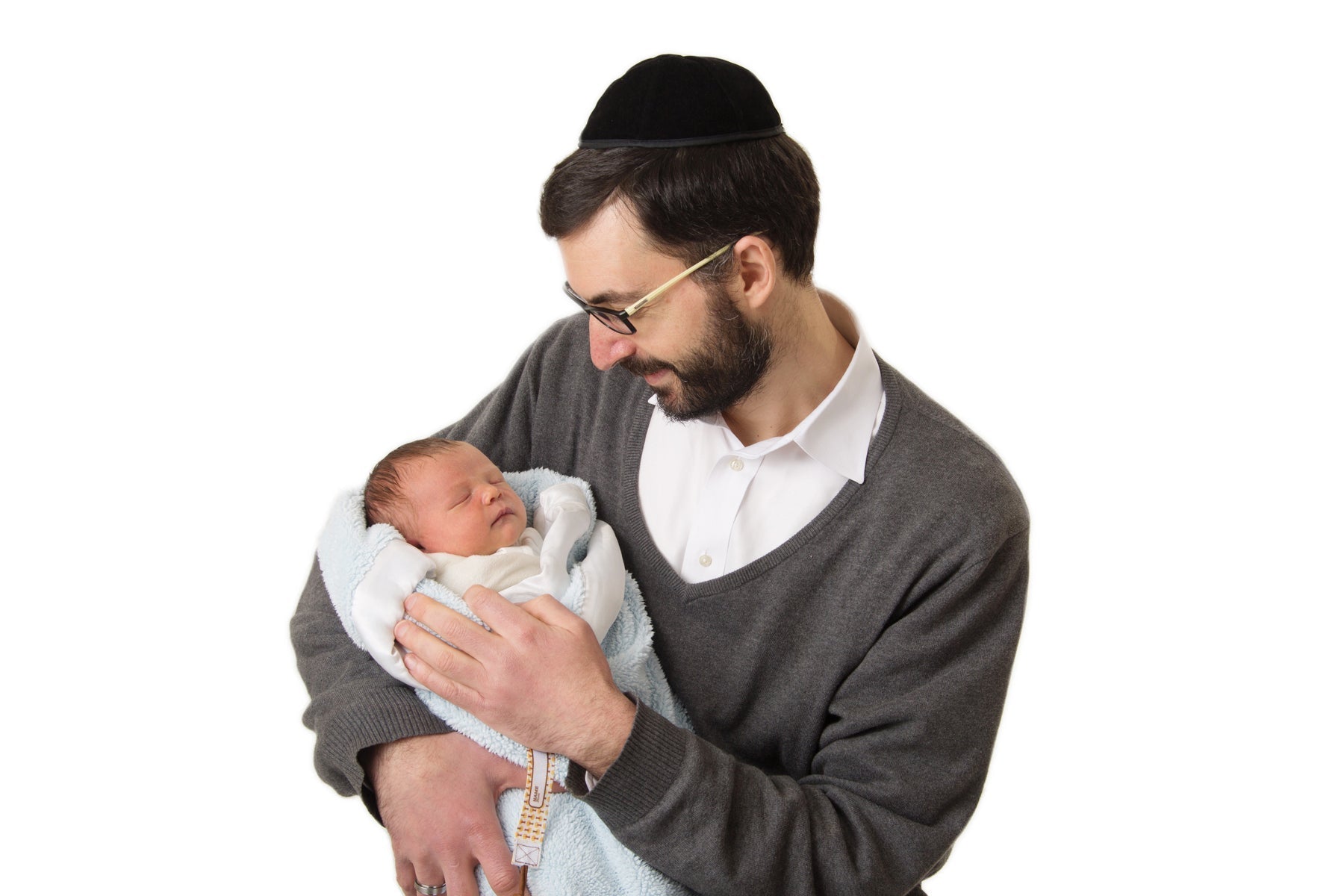
The short answer: yes, we perform in-home circumcisions for babies who didn't receive the Vitamin K injection, and we won't ask you to justify that decision. We also want you to have the full picture, so here's what the medical guidance says, where our policy differs, and what to talk through before the day.
What Vitamin K does, and why it's recommended
Vitamin K helps blood clot. Babies are born with very little of it, and breast milk contains only small amounts. Without enough Vitamin K, a small number of babies develop Vitamin K deficiency bleeding (VKDB), which is rare but can be serious, including bleeding in the brain. It can happen in the first days of life or weeks later, often with no warning signs.
For that reason the CDC and the American Academy of Pediatrics recommend a single Vitamin K injection for every newborn shortly after birth. Many hospitals and pediatric offices require it before they will perform a circumcision.
Where our policy differs
We don't require the Vitamin K injection before a circumcision. That's a difference in practice, not a claim that the guidance is wrong, and not advice to decline the shot. Families reach this decision in different ways, usually after a lot of reading and a long conversation at home, and we care for families on both sides of it. Our Vitamin K page sets out our position in full.
What we do differently when a baby hasn't had Vitamin K
Whether a circumcision is right for your baby without Vitamin K is a question about your baby, not something a web page can answer in the abstract, in either direction. Here's how we approach it:
- A history review first. Rabbi Levy goes over your baby's health and family history with you before the procedure. The consultation is free.
- If anything in your baby's history gives him pause, he'll tell you directly.
- On the day: the Mogen clamp technique, gentle pressure and careful bandaging.
- Afterwards: written aftercare, a next-day check-in, and direct access to your mohel through your secure portal while your baby heals.
Questions worth asking your pediatrician
- Given our baby's history, are there reasons for extra caution with a circumcision?
- Is there any family history of bleeding or clotting problems we should mention?
- If we've declined the injection, what signs of bleeding should we watch for in the coming weeks, not just after the circumcision?
When to get help right away
After any circumcision, call us or your pediatrician if you see more than a few drops of blood, or bleeding that doesn't stop with gentle pressure. Babies who haven't had Vitamin K can also bleed in other places, at any time in the first months. Get medical care urgently for bleeding from the nose, mouth or umbilical cord, blood in stool or vomit, unusual bruising, or a baby who is unusually sleepy, very fussy or vomiting. Call 911 in an emergency.
Talk it through with us
If you've made your decision and want a provider who will proceed, a free consultation is the easiest next step. Rabbi Levy will answer whatever you want to ask, including anything specific to your baby. Call (773) 217-0073.